
In today’s fast-evolving digital ecosystem, enterprises face unprecedented challenges in scaling their systems while maintaining flexibility and agility.
For companies looking to future-proof their enterprise architecture, adopting an API-driven integration strategy that leverages modular microservices and AI-powered automation is not just desirable but imperative.
This approach addresses the complexity of enterprise software landscapes, supports seamless system integration, and enables rapid innovation by connecting multiple enterprise tools like CRM, ERP, HRIS, and analytics platforms.
Adapting to such a strategy can streamline operations and drive business growth, as evidenced by industry leaders who have embraced these technologies.
Core Concepts of API-Driven Integration
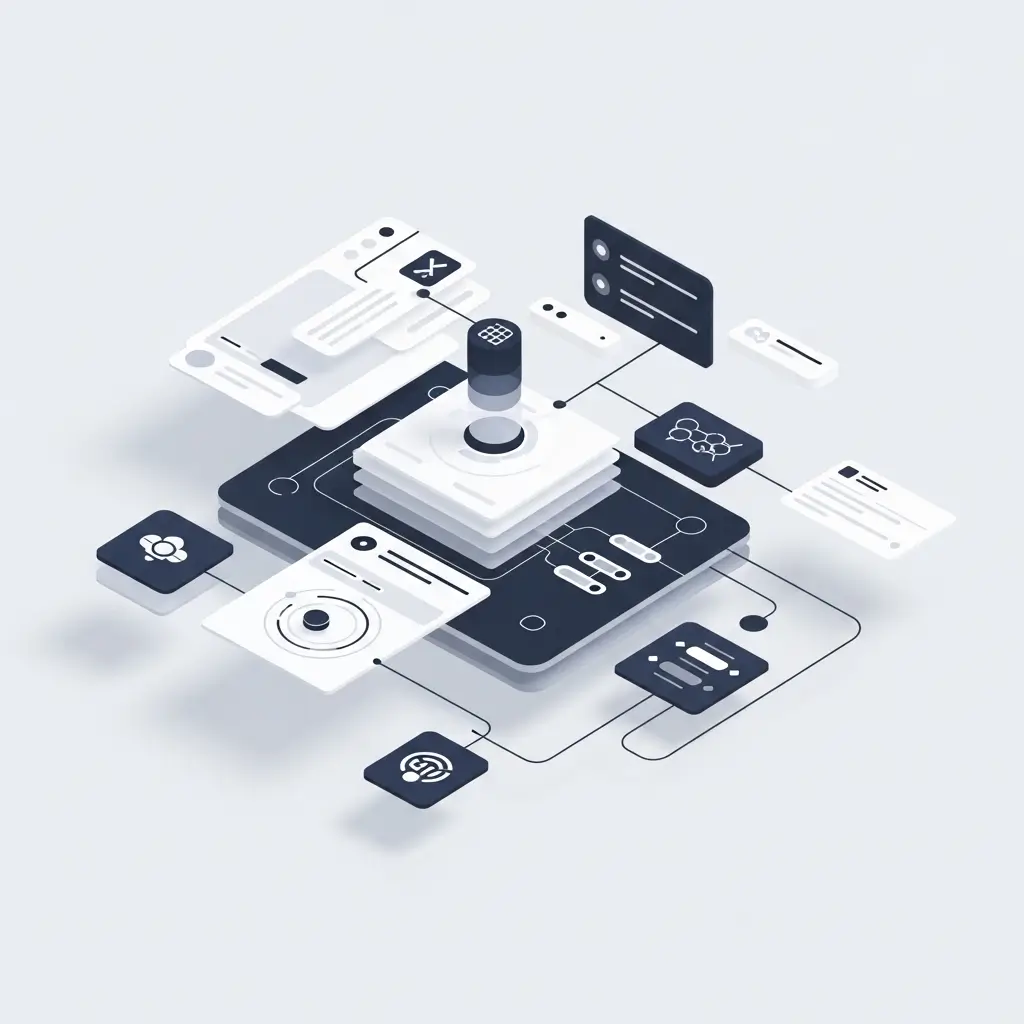
API-driven integration forms the backbone of modern enterprise system architecture by enabling disparate systems and services to communicate through well-defined, standardized interfaces. Unlike monolithic systems, this approach enhances modularity, reusability, and extensibility, essential for agile business operations.
- API Ecosystem: A scalable API ecosystem encompasses a variety of APIs, including RESTful, GraphQL, and gRPC, to enable synchronous and asynchronous interactions among services.
- API Orchestration: Centralized management of API calls, data transformations, and workflow automation to ensure efficient data flow between enterprise applications.
- Security & Governance: Implementing API gateways, authentication policies, rate limiting, and monitoring to secure and govern data exchange.
This strategy aligns with the concepts in scalable API ecosystem AI enterprise integration, fostering adaptive and resilient systems architecture.
Modular Microservices Architecture for Enterprise Scale
Microservices architecture complements API-driven strategies by decomposing enterprise functionalities into independent, loosely coupled services focused on specific business capabilities. This modular approach ensures high scalability, ease of maintenance, and rapid deployment cycles.
- Domain-Driven Design (DDD): As outlined by Eric Evans, DDD helps define clear bounded contexts for microservices, ensuring alignment with business domains and ubiquitous language among stakeholders.
- Service Autonomy and Scalability: Microservices can be scaled independently depending on demand, optimizing resource utilization—a significant advantage over monolithic architectures.
- Deployment and Infrastructure: Containerization technologies such as Docker and orchestration platforms like Kubernetes enable easy deployment, rolling updates, and fault tolerance.
Organizations like Netflix and Amazon have demonstrated how microservices empower enterprises to innovate rapidly and maintain high availability at massive scale. This architectural style requires mature DevOps with continuous integration and continuous deployment (CI/CD) pipelines and robust monitoring.
By investing in these technologies, enterprises can not only cope with market demands but also position themselves ahead of digital transformation curves.
Integrating Enterprise Software via API Orchestration
Enterprise systems such as CRM (Salesforce, HubSpot), ERP (SAP, Odoo), HRIS (Workday, BambooHR), finance (QuickBooks, Stripe), and BI platforms (Tableau, Power BI) are core to business operations but often operate in silos. An API-driven integration strategy uses orchestration layers to seamlessly connect these diverse applications, delivering unified workflows and consolidated data insights.
- Middleware Platforms: Tools like MuleSoft and Apache Camel enable endpoint orchestration, protocol bridging, and workflow automation.
- Real-Time Data Sync: Event-driven architectures utilizing message brokers (e.g., Kafka, RabbitMQ) can provide real-time synchronization, essential for operational accuracy.
- AI-Augmented Orchestration: Embedding AI models to anticipate system bottlenecks, optimize routes, and automate error handling enhances resilience.
Read more on advanced system integration at future proof enterprise integration.
AI Integration for Automation and Intelligence
Artificial intelligence (AI) amplifies enterprise integration by automating repetitive tasks and providing predictive insights that drive better decision-making.
- Intelligent Automation: Combining robotic process automation (RPA) with AI capabilities like natural language processing and machine learning to automate workflows.
- AI-Enhanced API Gateways: Incorporate AI models to monitor traffic anomalies, predict demand spikes, and enhance cybersecurity.
- Predictive Analytics & AI Dashboards: Integrate analytics platforms like Looker Studio and Power BI with AI models to synthesize large datasets for actionable insights.
- Emerging AI Frameworks: Large Language Models (LLMs) such as OpenAI GPT series and Gemini AI enable conversational interfaces and smart data retrieval via Vector databases and Retrieval-Augmented Generation (RAG) architectures.
Folkastudio applies these AI integrations to optimize business processes, as explored in AI website builder vs agency discussions, transforming traditional enterprise workflows into next-generation digital experiences.
UI/UX Design for Enterprise and SaaS Platforms
Well-designed user interfaces and experiences are critical to adoption and operational efficiency of enterprise software and SaaS platforms.
- Design Systems: Build component-driven UI using frontend technologies such as React, Next.js, Vue.js, and Tailwind CSS for consistency across platforms.
- Dashboard and Data Visualization: Create intuitive dashboards integrating BI tools for real-time analytics tailored to enterprise users.
- Mobile App Integration: Employ cross-platform frameworks like Flutter and React Native to provide productive mobile experiences.
Fostering a user-centric design is crucial for creating scalable digital products highlighted in how AI is changing the future of web design. The confluence of AI and user-centered design is shaping the next wave of digital solutions, making them more personalized and efficient.
Technical Stack and Infrastructure Considerations
A robust technology stack and resilient infrastructure underpin the success of API-driven modular microservices architectures.
- Frontend: React, Next.js, Vue.js, Astro, Tailwind CSS
- Backend: Node.js, Nest.js, Laravel, Django, Go, Rust, ExpressJS
- Mobile: Flutter, React Native
- Database: PostgreSQL, MySQL, MongoDB, Redis
- Cloud: AWS, Google Cloud, Azure, Digital Ocean, Cloudflare
- Infrastructure: Docker, Kubernetes for container orchestration; Nginx as reverse proxy; CI/CD pipelines for automation
This diverse yet coherent assortment of technologies is central to building agile and robust systems, capable of driving enterprise digital transformation initiatives forward with confidence.
Business Transformation Through Strategic API-Driven Integration
By deploying a thoughtfully designed API-driven integration strategy combined with modular microservices and AI automation, enterprises:
- Achieve scalability with independent service scaling and efficient resource utilization.
- Enhance agility by enabling rapid deployment and iterative improvements.
- Increase operational efficiency through AI-driven workflow automation and predictive analytics.
- Improve customer experience via integrated CRM and BI insights.
- Reduce technical debt by enforcing domain-driven modularity and API standardization.
In essence, such a comprehensive and forward-thinking approach to integration ensures that businesses can continuously innovate and refine their processes, effectively managing evolving market demands and customer expectations.
Real-World Framework Example
Applying the concepts mentioned earlier, a real-world framework may include:
- Domain-Driven Design (DDD) to define microservices boundaries in accordance with business contexts.
- API Gateway Layer to manage security, throttling, and routing, while providing a unified entry point for heterogeneous microservices.
- Containerized Microservices enabling smooth deployment, resilience, and service orchestration with Kubernetes.
- AI-powered Workflow Engine to dynamically orchestrate business processes, enhance decision-making, and automate system alerts.
Embracing such frameworks can lead businesses toward a more resilient and efficient operating model, poised to meet both current and future challenges.
Harnessing this power, Folkastudio is committed to helping clients build and scale their digital infrastructure to realize their strategic goals.
Strategic Takeaways
Aligning enterprise digital architecture to a future-proof, API-driven modular microservices framework enhanced by AI-powered automation is critical for competitive advantage. This approach unlocks adaptability, scalability, and intelligence, empowering enterprises to respond dynamically to market shifts and evolving business priorities.
Folkastudio’s expertise bridges the gap between advanced technology stacks, integrated enterprise software ecosystems, and AI augmentation strategies to architect scalable, resilient, and innovative digital platforms. For companies aiming to excel in the digital era, embracing this strategy is not optional—it is transformative and indispensable for long-term success.